

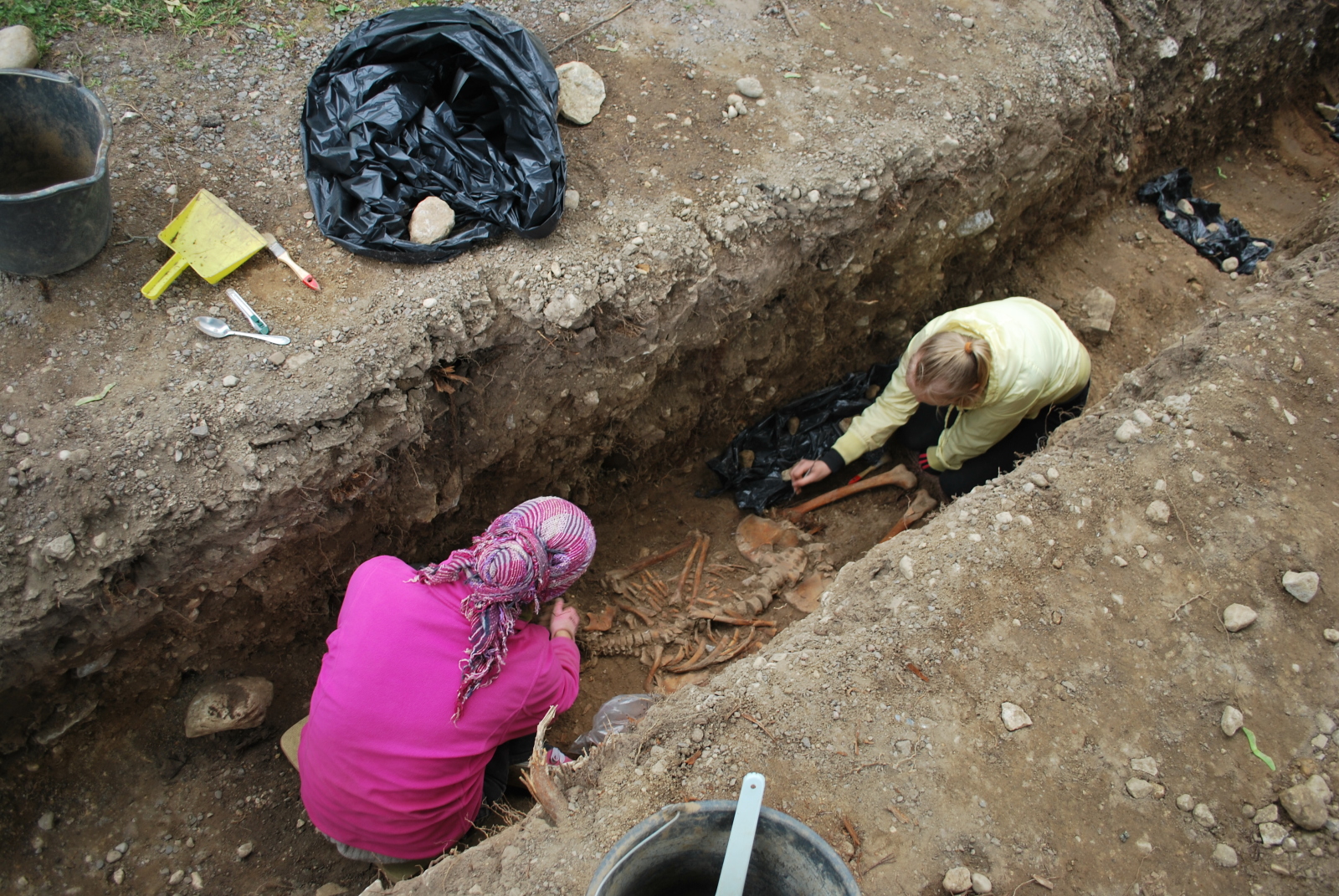
Photo by Martin Malve
Rescue excavations at the churchyard at Kose were undertaken due to the construction of pipelines in the church. The work was directed by bioarchaeologist Martin Malve. As a result of the field work, the churchyard at Kose is currenly the most thoroughly excavated parish churchyard in northern Estonia.
During the field work althogether 120 inhumation burials were unearthed; occasional burnt human bones were also observed. The burials date from Middle and Early Modern Ages. More than half of the recovered individuals were sub-adults, which is a common phenomenon at burial grounds of the mentioned period. The skeletons will be subjected to detailed osteological study at the University of Tartu, to determine the sex, age at death and the most evident pathologies of the deceased. The most interesting diseases and injuries detected from preliminary observation at excavation include a fatal blade injury on a male skull and traces of osteoemyelitis on lower limbs of a child. Common ageing-related diseases were also observed: osteoarthrosis on limb joints, and spondylosis and sponyloarthrosis on vertebrae.
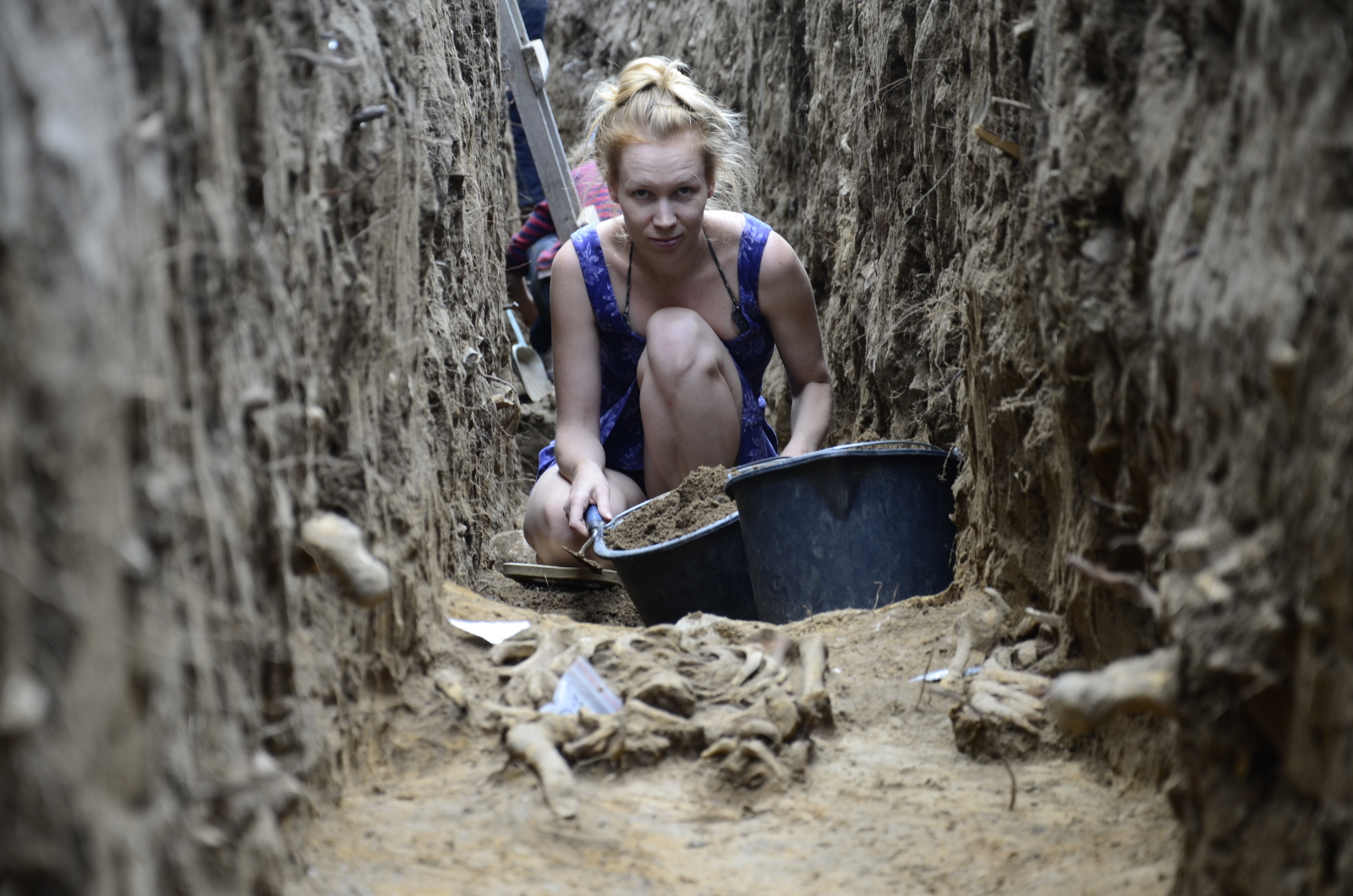
Photo by Raido Roog
Artefact finds collected at the excavations include numerous iron knives that had served as grave goods, and occasional coins of a Middle Age date. Worth of separate mentioning is a burial of a sub-adult with a necklace of cowry shells and bronze rumbler bells around his/her neck. Numerous decorative bronze mounts were collected as stray finds. A limestone pavement was also unearthed during the excavations.
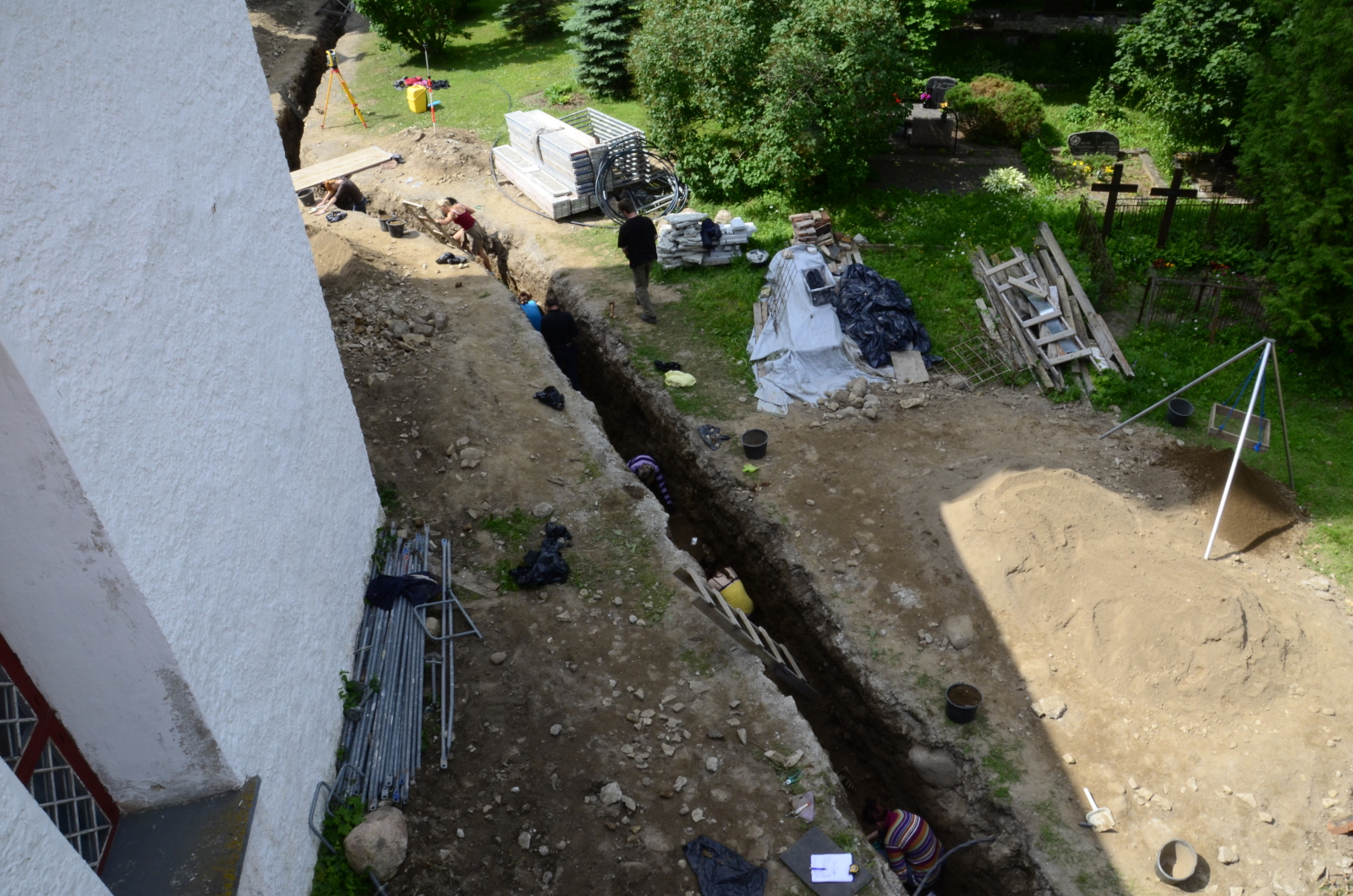
Photo by Raido Roog