Estonia-Latvia-Russia cross border cooperation Programme within European Neighborhood and Partnership instrument 2007-2013 financially support joint cross-border development activities for the improvement of the region’s competitiveness by utilising its potential and beneficial location in the cross roads between the EU and Russian Federation. Website: www.estlatrus.eu.
Since the May 1st, 2012, when projects “Archaeology, Authority & Community: cooperation to protect archaeological heritage” realization started, Project partners have done huge work to promote archaeological heritage preservation and its popularization in community. However, before accomplished work accounting, we shouldn’t forget to note significant changes in the archaeological heritage protection legislative field.
To limit the activities that seriously endangers archaeological heritage in Latvia, the State Inspection for Heritage Protection Republic of Latvia in collaboration with other institutions (Institute of Latvian History, National History Museum of Latvia) elaborated amendments in the law “On Protection of Cultural Monuments”, which was adopted in the Saeima (Latvian Parliament) and enacted on 23rd January, 2013. Amendments of the Law provides:
“From 23 January 2013, artefacts found in archaeological sites under ground, above ground or under water (dating from 17th century or earlier) shall belong to the state. National ownership will not apply to those antiques, about who the owner will notify in written form the State Inspection for Heritage Protection Republic of Latvia up to 30th March, 2013.
According to the definition of the Law, artefacts are objects created by conscious human activity – items such as jewellery, weapons, tools, household objects, ceramics, coins in intact form or as fragments, that are found underground, above ground or under water. Archaeological sites are state protected cultural monuments, and these can also include newly discovered sites, which shall be notified according to the Law to the State Inspection for Heritage Protection.
The Inspection shall be informed about a find in writing not later than five days after the finding, to enable faster assessment of the archaeological importance of the site and reduce the threat of destruction of the site.
The Law also prohibits removal of artefacts owned by the state outside the Republic of Latvia.
The amendment clarifies concept of cultural history environment affecting activities, which in the cultural heritage protection areas require Inspection permit. Those actions for example are construction, an artificial ground relief transformation, as well as previously unidentified object, which may have historical, scientific, artistic or other cultural value, removal from land or water.
The law defines that without real property owners (possessors) permit in cultural monument and its protection zone are prohibited any landscape changing activities and any device for metal objects or material density testing (for example metal detectors) using. In Cultural Heritage research devices for metal object and material density testing are permitted only with Inspection authorization.
The law also provides rights for Municipalities to allocate funds for Federal importance cultural heritage preservation and restoration.”
Quoted from the State Inspection for Heritage Protection Republic of Latvia website: www.mantojums.lv

In January the first realization phase of project “ARCHAEOLOGY, AUTHORITY & COMMUNITY: cooperation to protect archaeological heritage” concluded. Project partners to Technical Secretariat presented the first intermediate report about content (activities, achievements and self-evaluation) and financial statements, as well as the auditor’s opinion on the project.
Collecting of archive materials, databases and digital mapping for the Municipality of Aluksne
During the previous phase of the project, specialists from Institute of Latvian History collected archive materials about registered and potential archaeological monuments in Municipality of Aluksne. Collected information is from the National History Museum of Latvia Archaeology Department archives, State Inspection for Heritage Protection Republic of Latvia Documentation Centre and archive of Repository of Archaeological Material in Institute of Latvian History at the University of Latvia. In general all collected material contains of 3089 archive pages.

These materials will be used for Aluksne region archaeological exploration, for booklets and popular articles preparing, as well as archaeological sites in Aluksne region digital mapping (program Quantum GIS), which are upcoming months task.

On December database of Aluksne region archaeological sites was also started. In database information about 80 archaeological sites entered. Project specialists helped the Museum of Aluksne describe and date Museums archaeological collection of antiques (over 300 items), it will promote collections using in Museums exposition and informational events.

Municipality of Ludza starts projects realization
Third partner from Latvia – Municipality of Ludza with Museum of Ludza Project implementation began in December, when the Joint Technical Secretariat had accepted the registration of changes in the budget. These changes resulted in reduced project management costs, transferring mentioned part of budget to archaeological excavations on Ludza castle. On 2013 Partner plans to create medieval workshops in Museum of Ludza, as well as buy medieval costume replicas.
Project partners meeting in Pskov
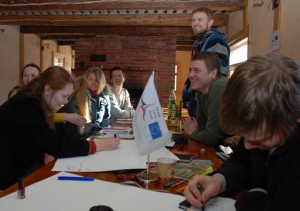
On 31st January and 1st February for Project partners met in Pskov to evaluate the work done during the last months of the Project and to set an task for 2013. Methodological seminar was attended by two Latvian partners – Institute of Latvian History and Municipality of Ludza.
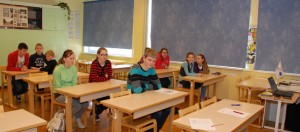
It was interesting for Latvian partners to see Estonian and Russian partners work in Project. Estonian partners has actively worked in popularization of archaeology, has intensive work on monument preliminary and had organized jointed heritage preliminaries and workshops with Russian partner. It should be noted that popularization of the archaeological heritage composes a significant part of the work within the Project. According to presented reports data, Estonian partners organized a 17 information days and workshops for different audiences (students, teachers, students from university and local community). Overall more than 1,300 people attended project partners organized events. The lead partner also has published a popular magazine on archaeology ‘Tutul’, which was given to all participants of the seminar.
Estonian and Russian partners in their areas have done preliminary expeditions in more than 600 archaeological sites; in 4 endangered monuments trial excavations was done. Both partner jointed preliminary activities let others to know not only with types of neighbouring areas monuments, but also share the experience of monument exploration and preliminary methodology. Jointed activities will undoubtedly promote mutual acquaintance and closer contacts between the specialists and students from both countries.


This year within the Project are going to be archaeological monument preliminary expeditions and trial excavations in Latvia too. Institute of Latvian History is going to make preliminary expedition around the Lake of Aluksne in this spring and trial excavations in Spieki burial ground in this summer.

Editor: Antonija Vilcāne /Project Partner and National Coordinator/
Design: Līga Palma /assistant/
Contacts:
Project partner and national coordinator: Antonija Vilcāne, e-mail: vilcaneantonija@inbox.lv
Institute of Latvian History: Guntis Gerhards, e-mail: guntis.gerhards@inbox.lv
Aluksne municipality and museum: Santa Supe, e-mail: santa@aluksne.lv
Ludza municipality and regional museum: Valērijs Dzevaltovskis, e-mail: dzevaltovskis@inbox.lv